
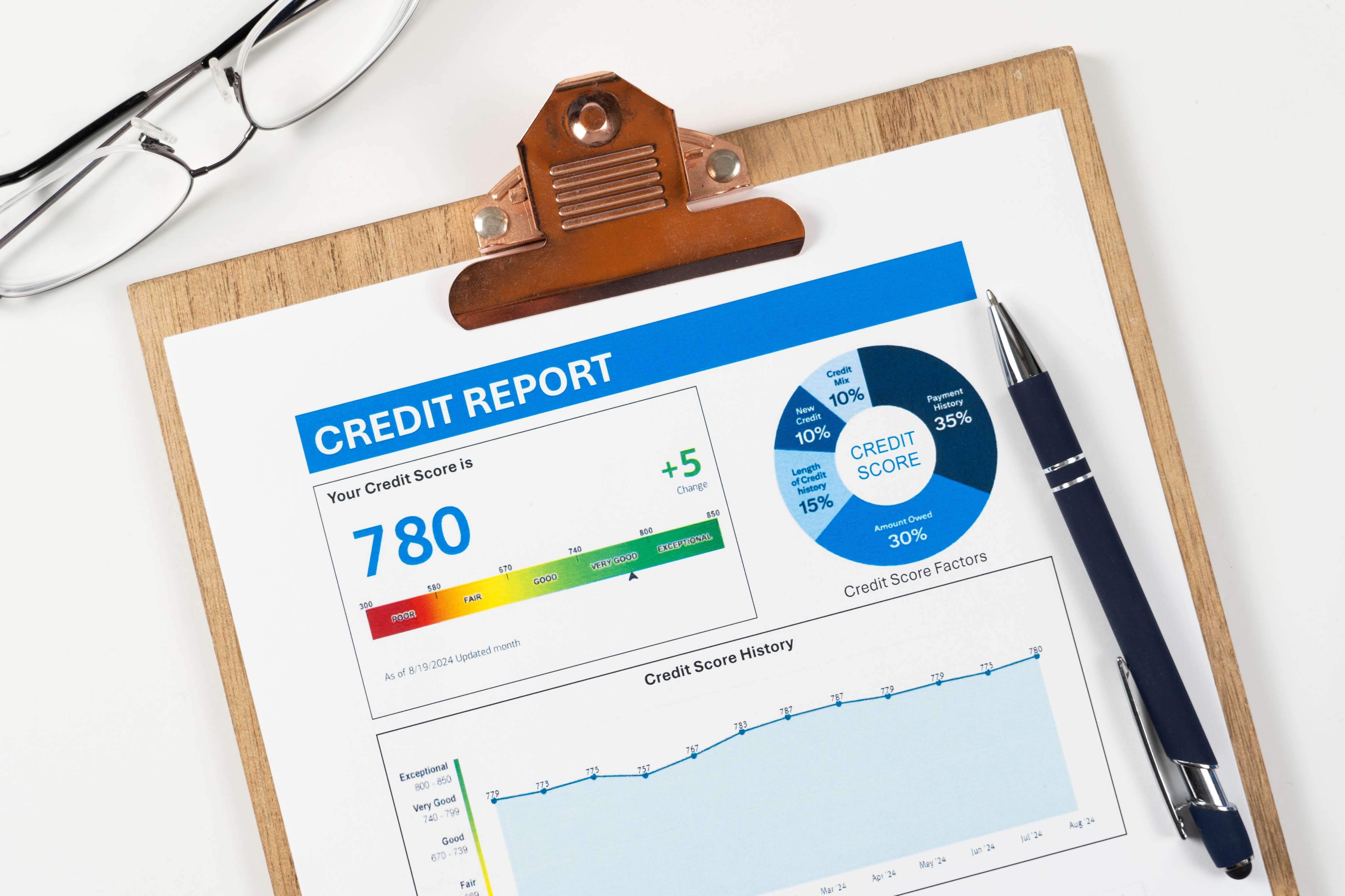
Before you ever test-drive a car, look at a single spec sheet, or even pick a color, the most important "shopping" you will do is on your credit report.
In the auto-financing world, your credit score is everything. It's the "magic" number that dictates whether you get a loan at all, and more importantly, how much you will pay for it. The difference between a "fair" score (620) and a "great" score (720) isn't just a pat on the back, but it could be a $5,000+ difference in interest over the life of your loan.
A credit score helps you not just buy a car but buy money as well. Here is your 5-step “Smart" plan to improve your credit score for a car loan and walk into that dealership with all the power.
Let's look at a $30,000, 60-month (5-year) auto loan:
Excellent Score (720+): You get a rate of ~5.0%.
Your payment: $566/month. Total Interest: $3,968.
Fair Score (620-680): You get a rate of ~10.0%.
Your payment: $637/month. Total Interest: $8,236.
Poor Score (Sub-620): You get a rate of ~16.0%.
Your payment: $730/month. Total Interest: $13,799.
By spending just 60-90 days to "boost" your score from 680 to 720, you would save $4,268. That's a massive return on your time.
First, you need to see what the lenders see. Do not use a "free" app that gives you a "VantageScore." You need your FICO Score—this is what 90% of auto lenders use. Go to AnnualCreditReport.com (the official, free site) to pull your full reports from all three bureaus (Equifax, Experian, TransUnion). Check them for any and all errors.
This is the fastest way to see a jump in your score, and it's 30% of your entire FICO score.
What It Is: It's the percentage of your available credit card limit that you are using.
Example: You have one credit card with a $10,000 limit. You have a $5,000 balance. Your utilization is 50%. This is a red flag for lenders; it signals you are "living on your credit."
The Fix: Your goal is to get your total utilization (across all cards) below 30%. The magic number is under 10%.
Action Plan: In the 30-60 days before you apply for a car loan, use your savings to aggressively pay down your credit card balances. This single move can boost your score by 20-50 points, fast.
This is the "big one"—35% of your score. Lenders want to see one thing: that you pay your bills on time.
The Problem: One single 30-day-late payment from two years ago can be devastating to your score.
The Fix:
Set Up Autopay: Immediately set up auto-pay for at least the "minimum payment" on every single one of your accounts. This makes you "bulletproof" against new lates.
The "Goodwill" Letter: If you have an old, paid-off late payment on your report, write a "Goodwill Deletion" letter to the original creditor. Politely explain your situation, highlight your otherwise-good history, and ask for a "goodwill gesture" to remove it. It's a long shot, but it works.
Your report may be wrong.
The Problem: A medical bill in collections you never knew about. An old account that's still listed as "open."
The Fix: Go through your report line by line. Dispute everything that is inaccurate, either online or via certified mail. This "housekeeping" can clear up old, toxic accounts that are dragging your score down.
What you don't do is just as important.
DON'T Close Old Credit Cards:
It seems smart, but it's not. Closing an old card hurts your score in two ways: 1) It lowers your "age of credit history" (15% of your score), and 2) It raises your utilization (you now have less available credit).
DON'T Open New Credit:
Do not apply for a new store credit card or a new personal loan right before your car loan. Every "hard inquiry" temporarily dings your score.
Your credit score is not a permanent grade; it's a snapshot in time. By taking 30-60 days to "clean up" your credit, you are not just getting a better score; you are changing your status. You stop being a "low-score applicant" hoping for a loan. You become a "high-score shopper" choosing the best one.